Testing service: Ultrasonic leak testing in a water bath
Automated gas bubble detection for reliable leak testing
Automated gas bubble detection for reliable leak testing
With ultrasonic leak testing in a water bath, MACEAS offers a high-performance testing service for parts, components, sample parts and small batches. The method is based on detecting escaping gas bubbles and is particularly suitable for pressurized parts where leaks need to be reliably detected and localized.
Unlike classic visual water-bath testing, bubble formation is not assessed solely by human observation. Detection is automated using ultrasound. This makes testing processes more objective, more reproducible and less dependent on the operator.
For quality assurance, development and process validation
Leak-tightness issues often occur at joints, seals, weld seams, transitions or downstream assembly processes. If they are detected too late, this can result in complaints, functional failures or safety-relevant issues.
The MACEAS testing service supports you in checking parts for leak tightness at an early stage—for example during development, sampling, prior to series approval, or as part of external quality assurance. The method is also well suited for small quantities, pre-series production and special parts.
How ultrasonic gas bubble detection works
In the ultrasonic gas bubble detection method, the test object is placed in a water bath and pressurized. If the part is leaking, gas escapes and forms bubbles in the water. These gas bubbles are detected using ultrasonic sensors and can be precisely localized.
The principle is similar to classic water-bath testing, where leaks become visible through rising air bubbles. However, MACEAS transfers this simple basic principle into an industrial, automatable testing process. This makes testing more reliable, more reproducible and significantly easier to evaluate even at low leak rates.
Additional MACEAS Testing Methods
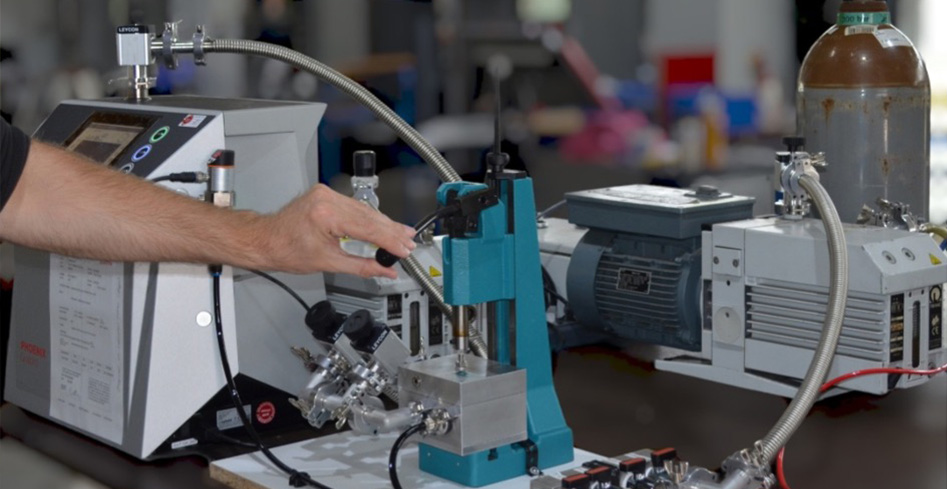
Our core competency, leak testing with a tracer gas such as helium, is a reliable method for detecting leaks in industrial applications. Thanks to the small molecular size of the tracer gas, even the smallest leaks can be precisely identified.
Ultrasonic leak testing is particularly attractive when a robust, illustrative and at the same time automatable test method is required. It is suitable for parts that can be pressurized with air or gas and whose potential leak points can be detected in a water bath.
The method can be a good choice when leaks are not only to be detected but also localized. It is also suitable for testing tasks where a purely manual visual inspection would be too uncertain, too subjective or insufficiently reproducible.
Testing service and demonstration of modern test systems
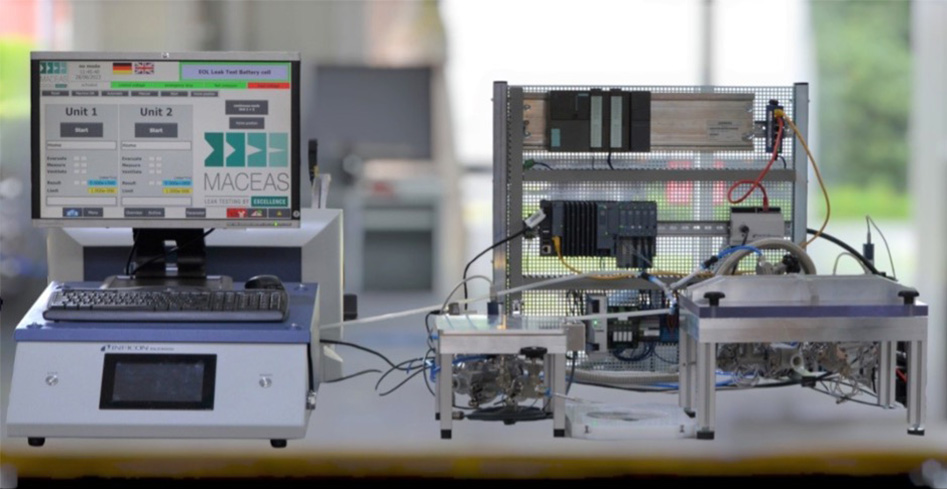
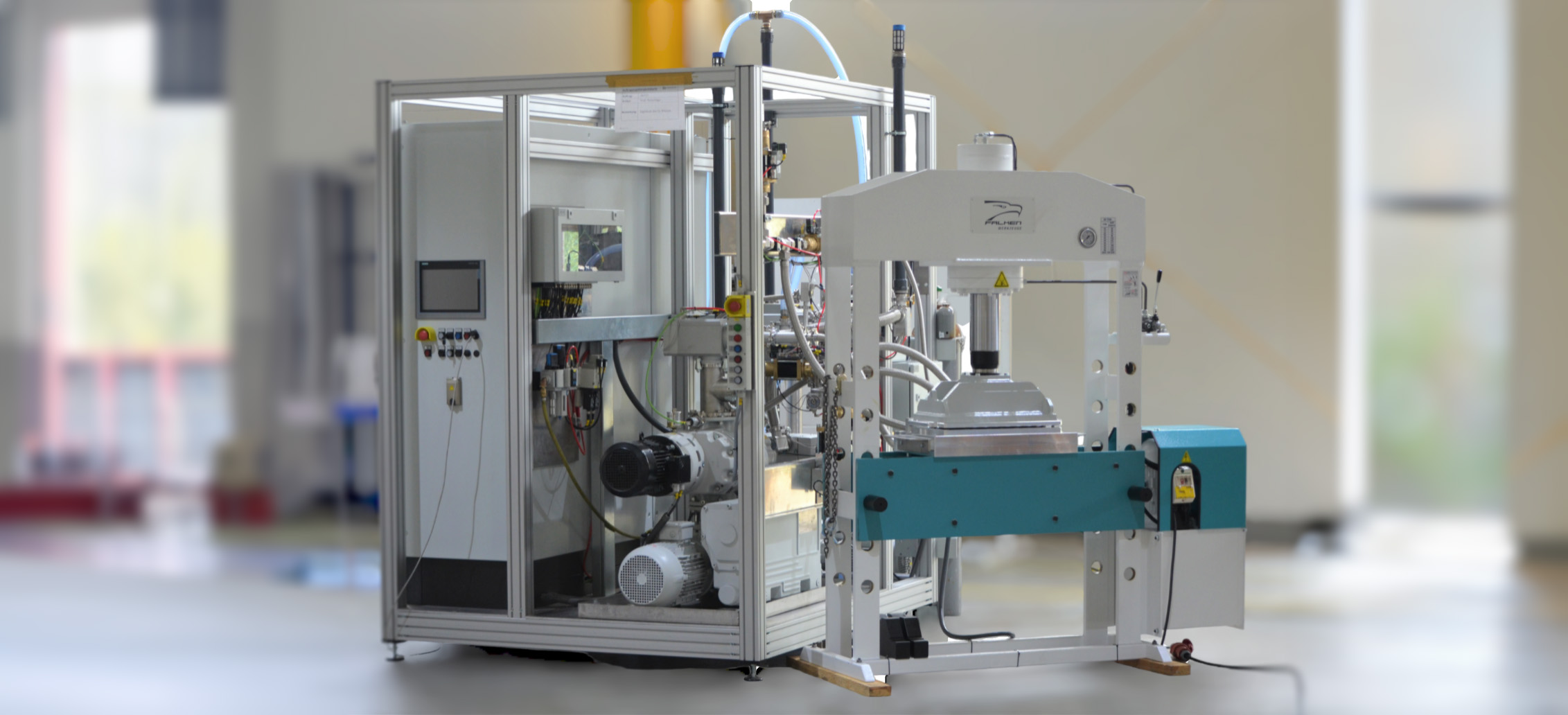
Our testing service gives you the opportunity to have parts tested at short notice and under practical conditions. At the same time, you can see our high-performance test systems in action and gain a clear impression of how automated ultrasonic leak testing works in an industrial context.
This is particularly valuable if you want to check whether such a method is suitable for your own production, quality assurance or series testing. The testing service can therefore be used as a technical feasibility study, as validation of individual parts, or as an entry point into a subsequent system project.
Why MACEAS?
MACEAS combines experience in special-purpose machine engineering with specific know-how in automated leak testing. Especially with ultrasonic gas bubble detection in a water bath, customers benefit from our expertise in test engineering, fixture design, process design and industrial automation.
We not only develop test systems, but also use them in our own testing service. This provides you with reliable test results and, at the same time, practical insights into possible test concepts for your own applications.
What distinguishes MACEAS
Many years of experience in quality assurance, especially in leak testing
State-of-the-art testing technology and technologies
Reliability and precision are our top priority
Customized solutions for your individual requirements
Rely on our expertise and our commitment to the highest quality
Would you like to have components, assemblies, sample parts, or small series tested using helium vacuum leak testing?
Please contact us. We will advise you on the appropriate testing method, component preparation, and next steps.