Electromobility will increasingly dominate the automotive market in the coming years, while vehicles with conventional combustion engines will be pushed back more and more.
For passenger cars, hybrid drives and battery solutions will still be used primarily in the near future, but the fuel cell and the use of hydrogen as a propulsion medium will also take on great importance in the future. Particularly in heavy-duty transport, in commercial vehicles, in shipping, in the aviation sector and also in local public transport, the fuel cell drive is a real alternative. Short charging times and sufficient ranges per storage cycle are the essential advantages of this concept. Furthermore, if the hydrogen is produced with regenerative energy forms (e.g. wind power), the ecological balance is also positive – keyword green hydrogen.
The Fuel Cell
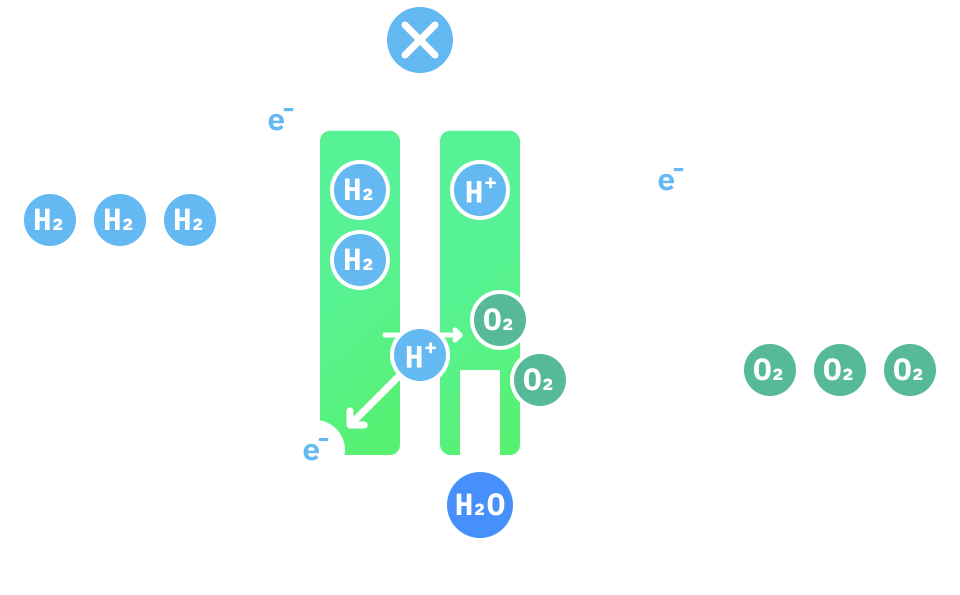
A fuel cell consists essentially of an anode, a cathode and in between so-called bipolar plates, between which a membrane (gas diffusion layer) is installed.
On one side gaseous hydrogen is supplied, on the other side oxygen (air). The positively charged parts of the hydrogen pass through the gas membrane, while the electrons cannot do this. However, since the charges always have the tendency to equalize, the negatively charged electrons flow via the external connections to the other side of the fuel cell.
This electric current is used, for example, to operate a motor or to charge a battery.
The hydrogen ions combine with the supplied oxygen to form water or, due to the heat generated in the process, to form water vapor, which is discharged as exhaust gas.
Schematic representation of a fuel cell
Helium Leak Tester for Testing the Bipolar Plates
An essential component of the fuel cells are the bipolar plates. In order for the process to function, it is very important that the bipolar plates are tight so that no gas can bypass the desired process through leaks. For this purpose we have developed a special helium leak test.
The helium leak tester is able to test both the so-called single plates or single plates, as well as the bipolar plates with corresponding test tools. In this process, the different circuits of the plates are tested for tightness against each other:
Water circuit to the outside
Water circuit to the hydrogen circuit and to the oxygen circuit
Hydrogen circuit to the oxygen circuit
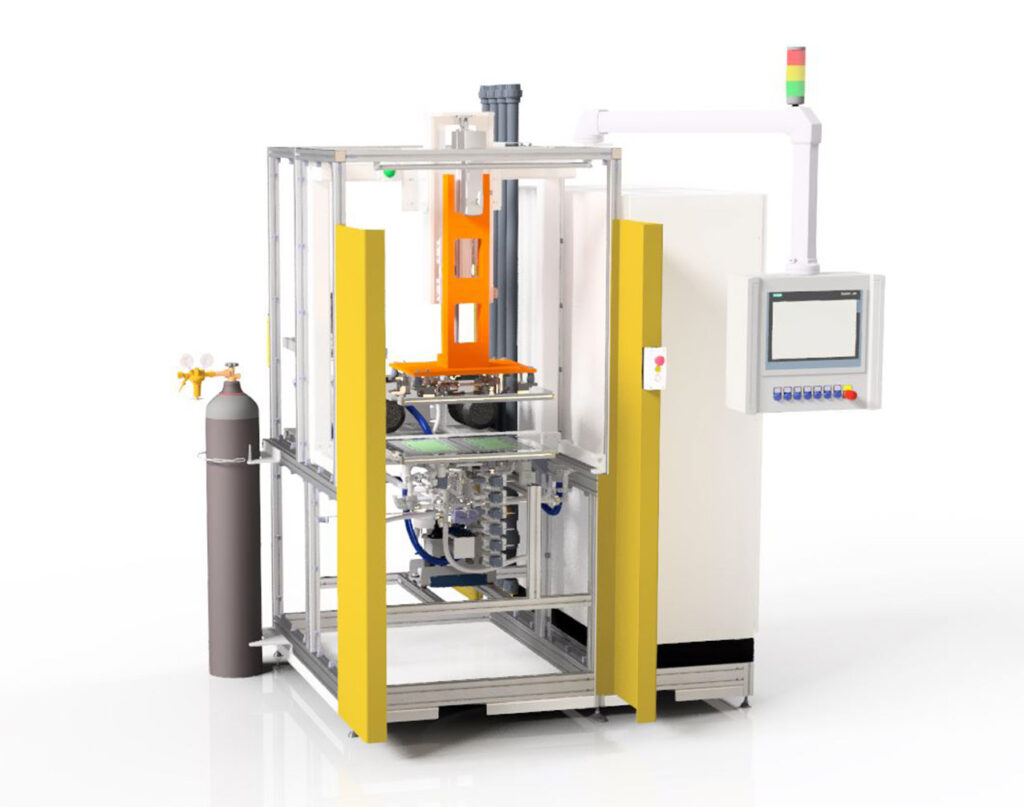
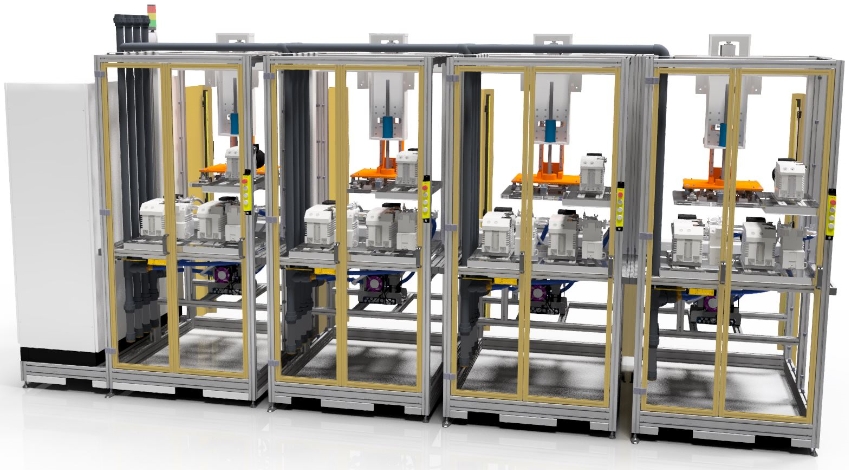
The structure of the system is designed in a modular way, starting with a main module that also contains the control cabinet and the operating elements. This is initially a manually loaded fixture, which is useful for small series and first prototypes.
Main Module with Manual Loading
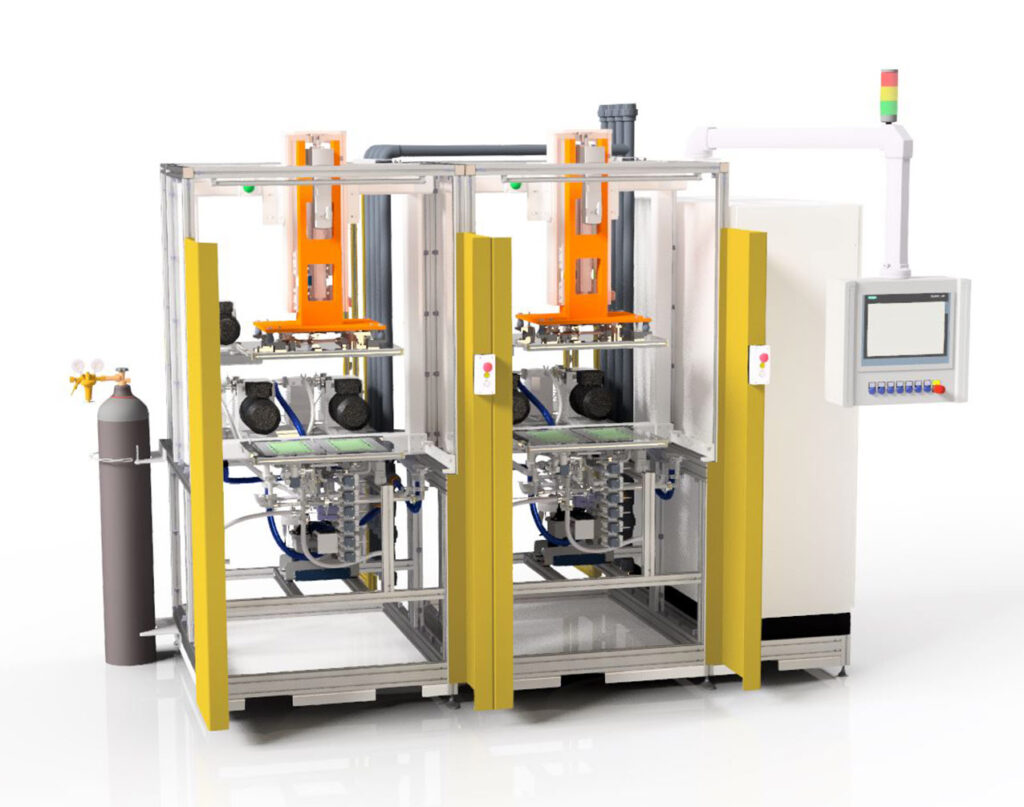
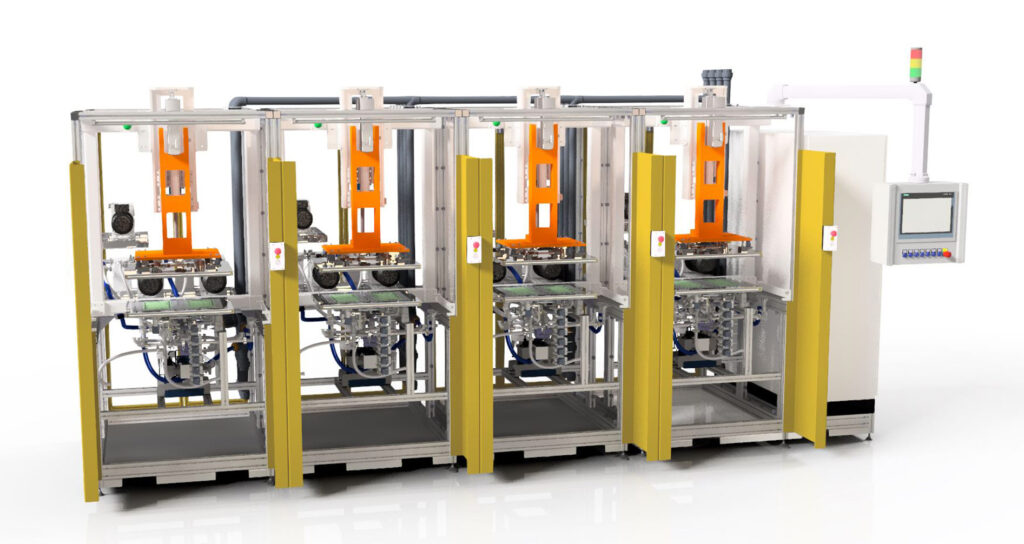
The basic fixture can be expanded with additional modules, for example with increasing production numbers. In the lowest expansion stage, 150 parts per hour can be tested, in the largest expansion stage 700 parts per hour (400 parts per hour with manual loading).
Main Module and Secondary Module with
Manual Loading
Main Module with Two or Three Secondary Modules, with Manual Loading
The Following Options Are Available as Supplementary Functions:
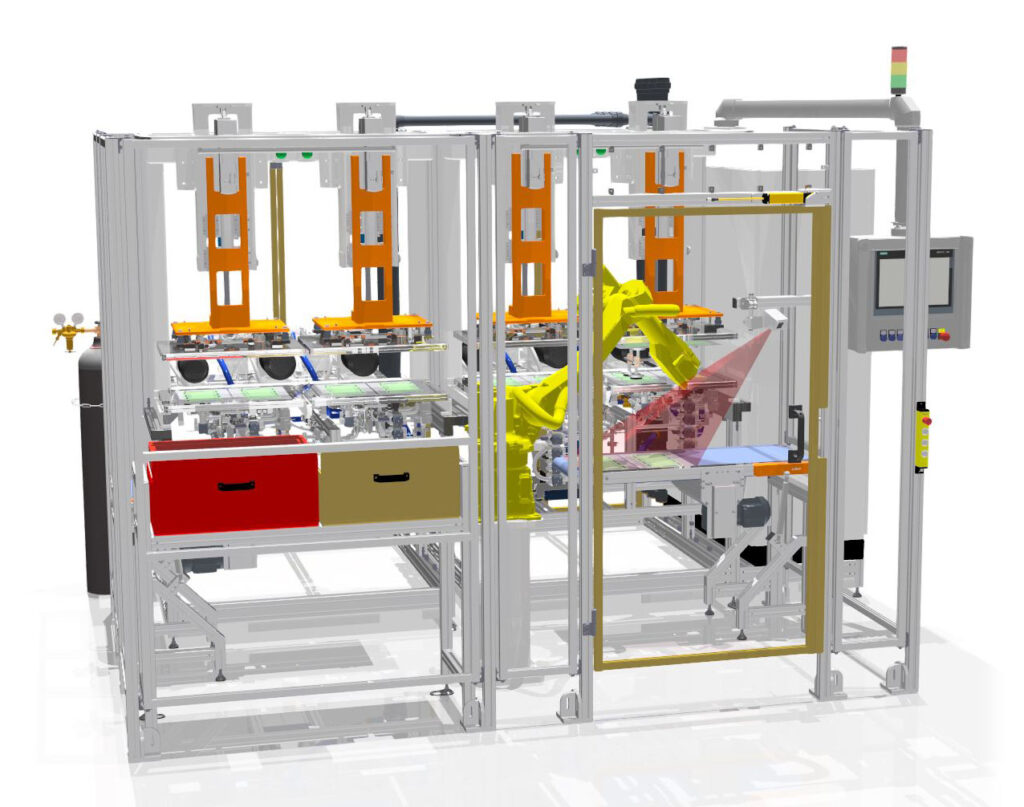
Full Automation with Robot Handling (approx. 700 pph)
Testing of anode/cathode end plates and "dummies"
Laser marking
Conveyor technology for feeding and removing test parts
Robot handling for inserting and removing the test parts
Vision system for position detection of the test parts in the infeed cell (as support for the robot handling)
NOK storage station
Rework station
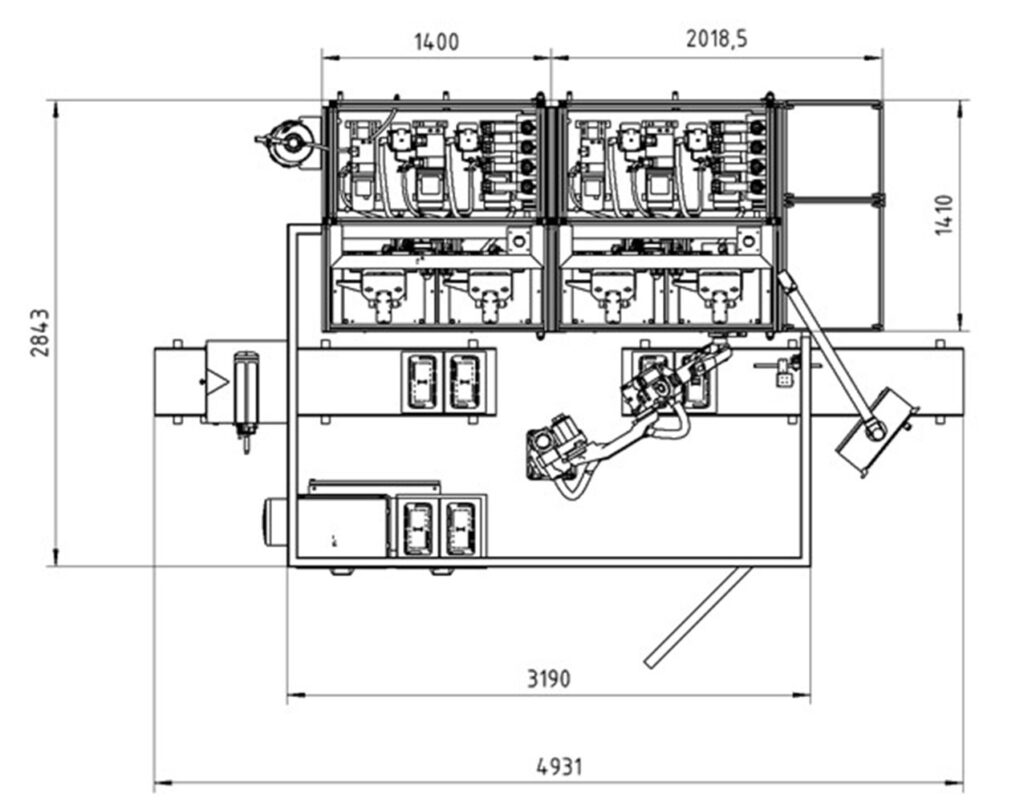
Space Requirement of the System
Fully Automated Part Handling by Means of Robot
Manual Part Handling
Details Helium Testing
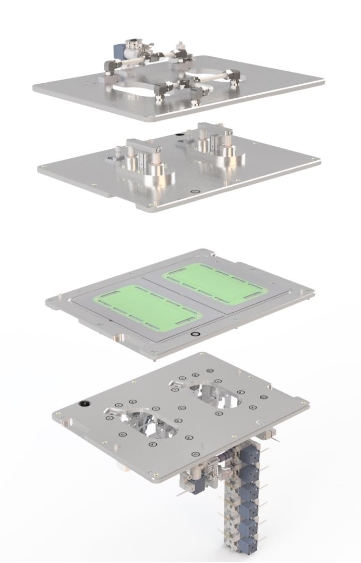
The test parts are positioned in the lower half of the test chamber via centering points and fixed via a vacuum system. Two parts are always tested simultaneously per module. As soon as the test parts are inserted and fixed, the chamber is closed and the helium leak test is carried out. After the test, the chamber opens and the tested parts can be removed.
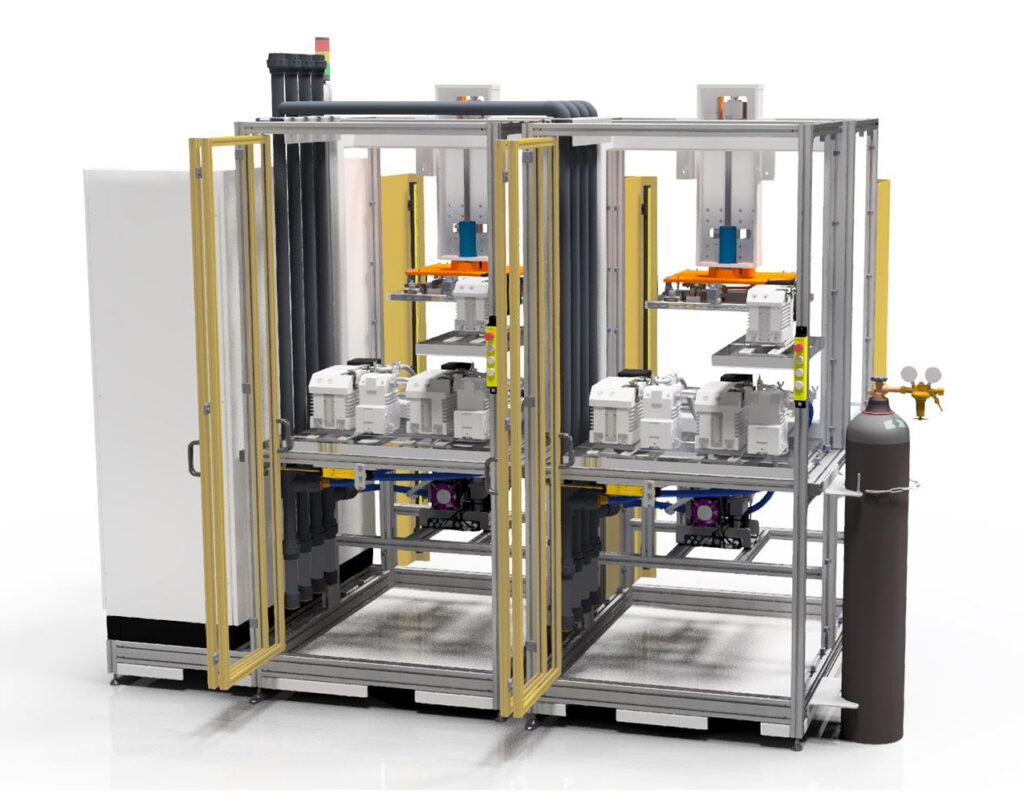
Pump Stand and Mass Spectrometer (2 Modules)
Structure of the Test Chamber with Interchangeable Inserts
Each test chamber can be equipped with a separate pump stand and a mass spectrometer.
Maintenance and Changeover Process
The module is easily accessible for maintenance activities via the large maintenance doors on the rear side. The changeover of the article-specific fixtures in the test chamber is carried out from the operator side. The changeover process can be carried out by one person within a few minutes.